
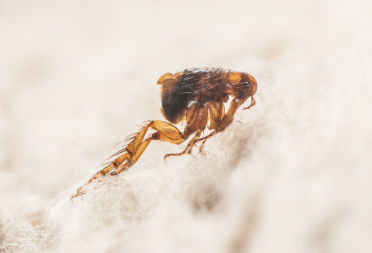
Fleas often enter a home on a dog, cat, or visiting animal, but they do not remain on the host permanently. Adult fleas feed on blood, then lay eggs that can fall from fur wherever the pet rests, walks, scratches, or sleeps. Those eggs may settle into carpets, upholstery, pet bedding, floor cracks, and beneath furniture.
This movement is why a flea problem can continue even after fewer adults are seen on the pet. Several life stages may already be developing indoors. Effective pest control must account for the animal, indoor resting areas, hidden development sites, and any outdoor source that could reintroduce fleas.

Flea Eggs Fall Wherever Pets Spend Time
Adult fleas usually live and feed on an animal, but their smooth eggs are not designed to stay attached to fur. As pets move through the home, eggs fall into surrounding materials. A favorite sofa cushion, rug, crate, or bed can become a concentrated development area because the pet returns repeatedly.
Common indoor collection points include:
- Carpets along pet travel routes and resting areas
- Upholstered furniture, cushions, and fabric-covered frames
- Pet bedding, blankets, crates, and washable mats
- Floor cracks, baseboard edges, and spaces beneath furniture
- Stairs, rugs, and vehicle seats used by pets
The eggs are difficult to see during ordinary cleaning. Their distribution also means that treating only the animal does not address what has already entered the environment.
Larvae Hide Deep Inside Soft Surfaces
After eggs hatch, flea larvae avoid light and move deeper into carpets, upholstery seams, and protected floor-side areas. They feed on organic debris, including material left by adult fleas. The guidance on summer pet protection helps explain why warm conditions, outdoor exposure, and pet routines can increase the number of fleas carried inside.
Larvae are not usually visible on the surface. Vacuuming may remove some eggs and larvae, but dense carpet fibers, furniture construction, and low-traffic spaces can protect developing populations. Larvae eventually form pupae inside sticky cocoons that collect dust and fibers, making them even harder to identify.
This hidden development can make the home appear improved before new adults emerge.
Furniture Creates Protected Flea Harborages
Sofas, upholstered chairs, bed frames, and other furniture provide folds, seams, dark undersides, and undisturbed spaces where flea stages can develop. Pets that climb onto furniture may deposit eggs in several rooms, even when their main bed is elsewhere.
Professionals commonly inspect:
- Cushion seams and gaps between upholstered sections
- Fabric skirts, frame joints, and furniture undersides
- Rugs and carpet directly beneath favorite resting spots
- Pet-accessible beds, benches, and window seats
- Nearby baseboards, floor edges, and low-clearance spaces
The pattern often follows pet behavior rather than room boundaries. A full inspection traces where the animal sleeps, waits, plays, and moves so treatment can remain focused on the locations most likely to contain hidden stages.
Clutter Makes Flea Activity Harder To Find
Stored fabrics, boxes, bags, and items beneath furniture can block inspection and create quiet areas beside pet routes. The relationship between clutter and pests is important because reduced visibility can allow flea activity to continue unnoticed around floor edges and soft materials.
Preparation should improve access without carrying potentially affected belongings into clean rooms. Homeowners may be instructed to organize floor-level clutter, launder specific fabrics, vacuum selected areas, and keep items contained. Moving everything without a plan may redistribute eggs, larvae, pupae, or adult fleas.
Professional preparation guidance helps homeowners support treatment while avoiding unnecessary disruption. It also clarifies which surfaces should remain accessible and how belongings should be handled.
Breaking The Life Cycle Requires A Coordinated Plan
Flea control is challenging because adults represent only one stage of the infestation. Eggs, larvae, and pupae may be present at the same time, and pupae can remain protected until warmth, vibration, or carbon dioxide signals that a host is nearby. New adults may therefore appear after initial treatment.
A professional plan may include:
- Inspecting floors, furniture, pet areas, and connected rooms
- Applying targeted indoor treatment to confirmed development zones
- Using vacuum-based preparation or follow-up protocols as directed
- Addressing shaded outdoor areas or wildlife-related sources
- Coordinating property treatment with veterinarian-directed pet care
Follow-up is often necessary because protected flea stages may emerge gradually. Technicians can evaluate whether activity is declining, identify overlooked hotspots, and adjust treatment based on current evidence.
Pets should receive appropriate veterinary care at the same time the property is treated. Treating the home without protecting the animal can allow surviving or newly introduced fleas to feed and reproduce again. Treating only the pet leaves eggs and immature stages in carpets and furniture.
The strongest results come from addressing every connected part of the cycle. Inspection identifies where fleas are concentrated, preparation exposes hidden areas, targeted treatment addresses indoor development, and follow-up confirms whether activity is continuing. This process provides a clearer path to long-term relief than responding only to scratching pets or visible adults.
Stop Fleas From Settling Into Soft Surfaces
Contact United States Pest Service for professional inspection, targeted flea treatment, pet-area evaluation, and dependable follow-up pest control.