
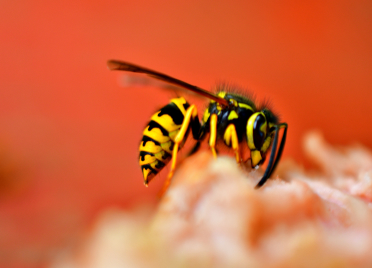
Stinging insects become a greater concern when their nests develop near doors, patios, gardens, rooflines, walkways, or other areas people use regularly. Wasps, hornets, and yellow jackets may defend their nesting space when movement, vibration, yard work, or ordinary foot traffic brings someone too close.
A few insects visiting flowers may be part of normal outdoor activity. Repeated flight toward one opening, defensive behavior, or growing traffic around the same section of the property suggests a nearby nest. Recognizing these patterns early allows professional inspection and removal to take place before the colony becomes larger or more disruptive.
Repeated Flight Paths Can Reveal A Nest
Stinging insects often follow consistent routes between food sources and their colony. Watching from a safe distance may reveal workers entering a soffit, shrub, wall gap, roof edge, hollow post, or ground opening.
Warning signs worth noting include:
- Repeated movement toward the same eave, vent, siding gap, or tree.
- Several insects entering and leaving one concealed opening.
- Increased buzzing near a shed, attic, deck, or exterior wall.
- Workers carrying food or nesting material toward one location.
- Defensive circling or rapid approaches near a particular area.
The nest may be much larger than the visible opening suggests. Wasps and hornets can use concealed structural cavities, while yellow jackets may nest underground or inside wall voids. Professional identification helps determine what species is present and where the colony is likely located.
Summer Conditions Bring More Activity Near Homes
Warm New York summers support longer feeding periods, faster colony growth, and more outdoor activity. Gardens, flowering plants, outdoor meals, trash containers, standing water, and sheltered building features can bring stinging insects closer to homes and businesses.
This overview of summer pest activity helps explain why seasonal changes make nests more noticeable. Stinging insects may establish colonies beneath eaves, inside attics, behind siding, in dense shrubs, or around garden structures where they receive protection from weather and disturbance.
The location matters as much as the colony size. Even a developing nest can create concern when it sits beside an entrance, play area, outdoor seating space, or frequently used walkway. Early assessment can reduce the chance of repeated encounters as worker numbers increase.
Nesting Areas Often Hide In Plain Sight
Property owners may overlook nest locations because the insects use ordinary structural and landscape features. A small opening can lead to a protected cavity that supports a much larger colony.
Common nesting locations include:
- Rooflines, soffits, attic vents, and gaps behind siding.
- Thick shrubs, tree branches, hedges, and overgrown vegetation.
- Deck railings, sheds, play structures, and hollow fence posts.
- Ground cavities, abandoned burrows, and spaces beneath landscaping.
- Wall voids, exterior fixtures, and sheltered utility openings.
Do not assume that blocking the opening will solve the problem. Trapping active insects inside may push them toward another exit, including interior spaces. A professional service can locate the nest, evaluate access, and use an approach suited to the species and setting.
Garden Activity Can Increase The Risk Of Encounters
Gardens naturally attract many insects because they offer flowers, water, prey, and shelter. Stinging insects may forage without nesting nearby, but repeated activity around one structure or planting bed deserves closer attention.
Preparing outdoor spaces through seasonal garden care can improve visibility and reduce overlooked nesting conditions. Trimming dense growth, clearing organic debris, managing standing water, and keeping pathways accessible make it easier to notice flight patterns or concealed openings.
These steps support inspection, but they do not replace professional removal once a colony is established. Yard work near an unseen nest can trigger defensive behavior, particularly when mowing, pruning, moving furniture, opening a shed, or disturbing soil. Where activity is concentrated, the safest course is to keep people and pets away until the source has been evaluated.
Professional Removal Addresses More Than Visible Insects
The insects seen in flight represent only part of the colony. Treating individual workers does not remove the nest, developing brood, queen, or protected structure supporting ongoing activity.
A professional stinging-insect service may involve:
- Identifying whether the insects are wasps, hornets, or yellow jackets.
- Locating exposed, concealed, elevated, or underground nests.
- Assessing nearby doors, paths, gardens, pets, and high-traffic areas.
- Applying targeted treatment with appropriate protective equipment.
- Removing accessible nest material and reviewing possible return sites.
Follow-up and prevention are important because suitable nesting features may attract future colonies. Once the active nest has been addressed, technicians may recommend sealing structural gaps, repairing screens, trimming vegetation, or monitoring previously active locations.
Professional help also reduces the risk of incomplete treatment. Hidden colonies can extend beyond the visible entrance, and different species react differently when disturbed. Careful inspection, controlled removal, and property-specific prevention provide a more efficient response than approaching a nest without knowing its size or location.
Protect The Spaces You Use Most
Do not let a nearby nest turn ordinary outdoor activity into a recurring hazard. Contact United States Pest Service for professional inspection, nest removal, and long-term protection from stinging insects.