
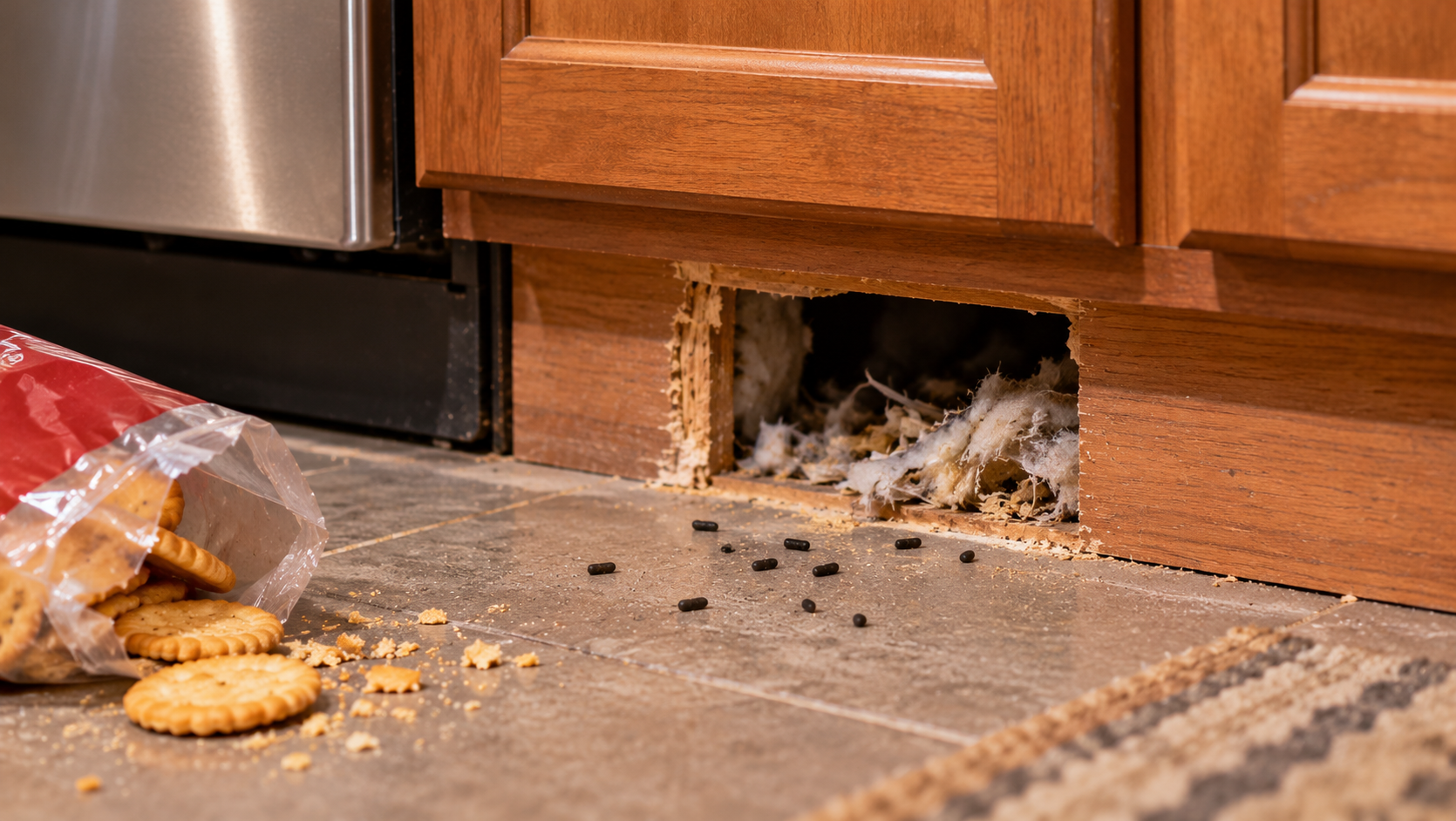
The kitchen looks clean, but something keeps rustling beneath the sink after dark. Perhaps a packet of crackers has a tiny hole, or small black pellets appear beside the dishwasher. These clues can point toward mice, although they do not automatically mean a nest is behind the cabinets. In Middletown homes, we look at the location, frequency, and combination of signs before concluding. Cabinet cavities offer sheltered travel routes, and determining whether mice are merely passing through or settling nearby changes the inspection plan.

Look for Evidence Beyond One Stray Dropping
Mice usually avoid open spaces when they can travel along protected edges. The narrow space beneath a cabinet base, behind an appliance, or around a sink pipe may allow movement without a clear sighting. A single dropping cannot show exactly where a mouse sleeps. Multiple signs concentrated in the same area provide a more useful reason to investigate.
When checking accessible kitchen areas, notice these details without pulling apart cabinetry:
- Droppings: Small, dark pellets along cabinet corners or appliance edges suggest rodent travel, but cannot identify a nest by themselves.
- Gnawing: Chewed food packaging, cabinet edges, or stored materials indicate that something has been feeding or exploring nearby.
- Sounds: Repeated scratching or faint movement behind a kickboard at night may suggest activity inside a concealed space.
- Nesting material: Shredded paper, soft insulation, or fabric fragments gathered together can indicate an established shelter.
- Odor: A persistent musky smell in a confined area may accompany heavy or ongoing mouse activity.
Patterns matter more than any isolated clue. A homeowner might discover old pellets after moving a refrigerator, while fresh damage develops elsewhere. Our article on unseen mouse activity explains why finding droppings without seeing an animal is common. We still need to inspect surrounding areas before identifying where rodents are nesting.
Trace the Route Into the Cabinet Voids
Kitchen cabinets contain several places where finished surfaces meet plumbing, flooring, and walls. Those transitions are worth examining because mice can enter surprisingly small openings. An opening beneath the sink does not necessarily lead outdoors; it may connect to a wall cavity, basement, or utility chase. We distinguish an indoor travel route from the original building entry point.
A careful visual check can reveal likely pathways:
- Sink penetrations: Look for visible gaps where water or drain pipes pass through the cabinet back or floor.
- Dishwasher openings: Check accessible edges beside the appliance, but avoid pulling it out or disturbing electrical connections.
- Toe kicks: Notice openings or damage along the recessed strip beneath lower cabinets.
- Pantry corners: Examine where shelving, walls, and baseboards meet, especially near frequently used food storage.
- Nearby utility areas: Consider basement ceilings or adjacent storage spaces that may connect to kitchen wall cavities.
Our guide to small rodent entry gaps describes how mice exploit building openings. Middletown’s colder months can make protected indoor spaces attractive, but nesting is possible throughout the year when food, water, and shelter remain available.
Avoid sealing a suspected opening immediately if rodents may still be inside. The correct order depends on the inspection findings. Closing one route without addressing activity or alternate access may simply shift movement to another hidden area.
Respond Safely and Prevent Another Visit
A suspected cabinet nest deserves a measured response. Droppings and nesting materials can carry germs, and sweeping or vacuuming dry contamination can disperse particles. Children and pets should stay away from affected storage areas. Keep food sealed and do not handle an unfamiliar nest or reach blindly into an enclosed cavity.
The next steps should protect the household while helping us locate the problem:
- Document evidence: Photograph droppings, damaged packages, and accessible openings before cleaning or changing the area.
- Clean properly: Follow CDC guidance by ventilating and wetting rodent waste with disinfectant before carefully removing it with gloves.
- Secure food: Move dry goods and pet food into sturdy, tightly closed containers and promptly clean spills.
- Reduce hiding spots: Clear unnecessary cardboard and clutter without disturbing areas containing suspected contaminated material.
- Request inspection: Have recurring sounds, fresh droppings, or suspected nests evaluated alongside possible entry points.
For substantial contamination or material inside inaccessible cavities, professional assessment is preferable to improvised removal. Our rodent-control process considers where mice travel, how they entered, and which control measures fit the property. Depending on the findings, we may use appropriately positioned traps or secured bait stations, exclusion measures, and follow-up monitoring.
A quieter kitchen after one night does not establish that the problem has ended. Continued monitoring and correction of access conditions are important because activity can move between hidden spaces. The goal is to address the animals and the conditions that allowed them inside.
Find Out What’s Happening Behind the Cabinets
You do not need to dismantle your kitchen to take the first useful step. If suspicious sounds, droppings, or damaged packaging keep appearing in your Middletown home, United States Pest Service can investigate potential nesting areas and recommend an appropriate rodent-control plan. Contact our team to arrange an inspection and understand what the evidence actually shows.