
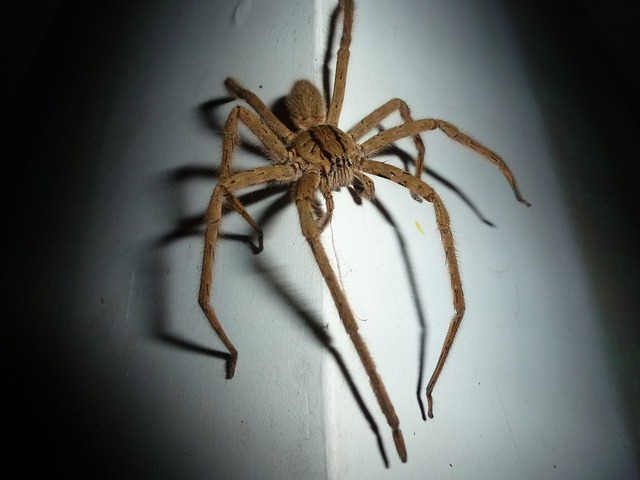
Summer brings more insect activity around homes, and spiders often follow that food source. Warm temperatures, moisture, landscaping, exterior lighting, and open doors can increase the number of ants, flies, mosquitoes, cockroaches, and other insects moving near a property. Where prey becomes easier to find, spiders have more reason to settle nearby.
Effective spider control looks beyond the visible web. A professional inspection considers where insects are gathering, how spiders are entering, and which outdoor or indoor conditions are helping both groups remain active. Reducing those supporting conditions can make recurring spider activity easier to manage through the summer.
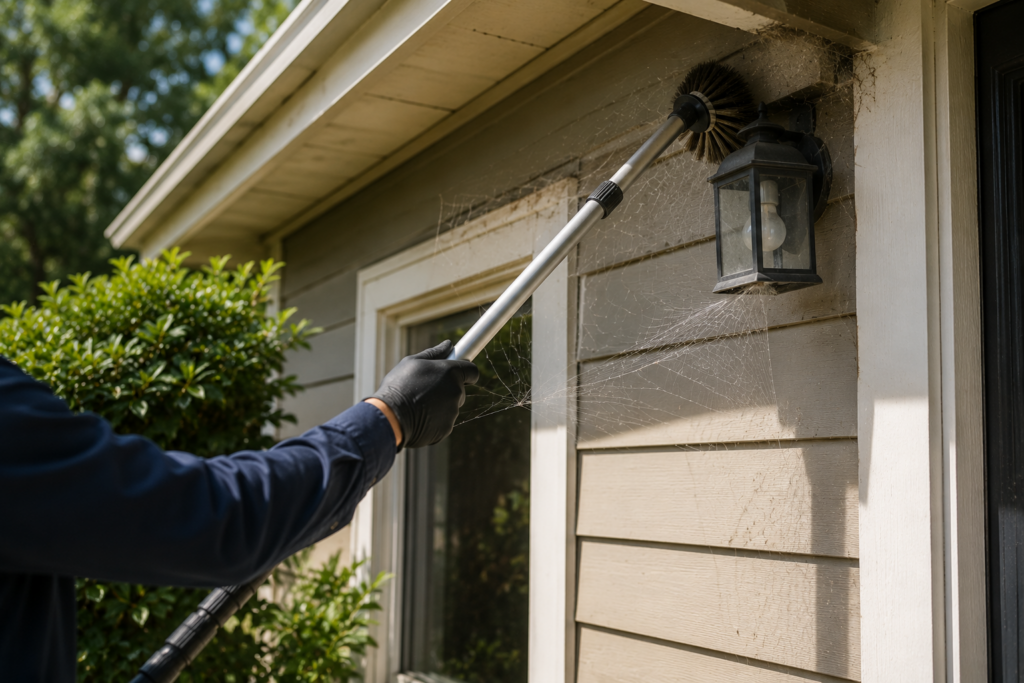
Exterior Lighting Can Create Reliable Feeding Areas
Outdoor lights attract many flying insects after dark. When moths, flies, mosquitoes, and other insects repeatedly gather near a porch, garage, patio, or doorway, spiders may establish webs close to those dependable feeding areas.
Common activity zones include:
- Porch lights near entry doors
- Garage lights close to structural gaps
- Patio fixtures beside seating areas
- Windows illuminated from inside at night
- Eaves where insects collect around lighting
- Landscape lights surrounded by vegetation
Managing these zones does not mean eliminating every outdoor light. The goal is to understand where insect activity is concentrated and whether spiders are using nearby corners, siding, vents, or landscaping for shelter. Seasonal garden preparation also helps reduce debris, overgrowth, and moisture that can support insects around the home.
Moisture And Landscaping Can Increase Spider Prey
Summer moisture can influence spider activity indirectly. Irrigation, rain, clogged drainage, damp mulch, and shaded vegetation may support insects that spiders feed on. Dense plants can also provide protected spaces where webs remain undisturbed.
Homes with shrubs touching siding, heavy ground cover, or damp foundation edges may experience more insect traffic close to exterior walls. Spiders can take advantage of that movement by building webs where prey regularly passes.
Professional spider control evaluates both the spider and the surrounding insect pressure. If the property continues producing favorable conditions for ants, flies, mosquitoes, cockroaches, or other prey insects, simply removing webs may provide only short-term improvement. Targeted treatment and habitat correction can reduce the reasons spiders keep returning to the same parts of the property.
Doors, Windows, And Gaps Help Spiders Move Indoors
Spiders can enter homes through the same openings used by the insects they hunt. Summer increases this opportunity because doors may open more often and pest activity around the exterior is usually higher.
Important entry areas include:
- Worn weatherstripping around doors
- Tears or gaps in window screens
- Openings around utility penetrations
- Cracks along siding or foundation transitions
- Garage-door gaps near the floor
- Vents without secure screening
Once inside, spiders may settle near basements, garages, storage areas, windows, or other low-disturbance spaces where insects are available. Sealing confirmed entry points can support long-term prevention, but inspection should come first when recurring activity suggests pests are already using hidden spaces.
Monitoring Reveals Why Spider Activity Keeps Returning
Spider sightings can seem random, but repeated webs often form a pattern. A corner that produces new webs after cleaning may be close to an entry point, moisture source, exterior light, or steady supply of insect prey.
This is where professional pest monitoring becomes valuable. Regular inspection can connect small changes in activity with broader conditions around the property. Technicians may track where insects are entering, where moisture is developing, and which exterior areas are creating the strongest pest pressure.
Monitoring also helps determine whether spider activity changes as summer progresses. A hot, dry period may push insects toward water, while rainfall may increase activity around vegetation and foundations. Professional follow-up allows spider control to adjust to those changes instead of repeating the same treatment everywhere.
Long-Term Spider Control Starts With Reducing Insect Pressure
Spiders are predators, so lasting control often depends on reducing the insect activity that supports them. A complete summer plan should address food sources, shelter, moisture, access, and recurring activity together.
A professional strategy may include:
- Inspecting interior and exterior spider activity
- Identifying insect prey around web locations
- Reducing moisture and debris near the structure
- Treating active pest zones based on inspection findings
- Sealing confirmed gaps and access points
- Scheduling follow-up when activity shifts or returns
This broader approach helps keep treatment focused. It also avoids treating every spider sighting as an isolated problem when the underlying issue may be a steady supply of insects around lights, landscaping, garages, or entryways.
This makes seasonal adjustments easier when insect populations change during summer. Summer spider activity is often a sign that the surrounding environment is providing dependable prey. When insect pressure, shelter, and access are addressed together, professional spider control can provide more consistent results and reduce the conditions that invite spiders back.
Break The Summer Spider Cycle
If spider webs and sightings keep returning around your home, contact United States Pest Service for professional spider control, inspection, targeted treatment, prevention, and follow-up.