
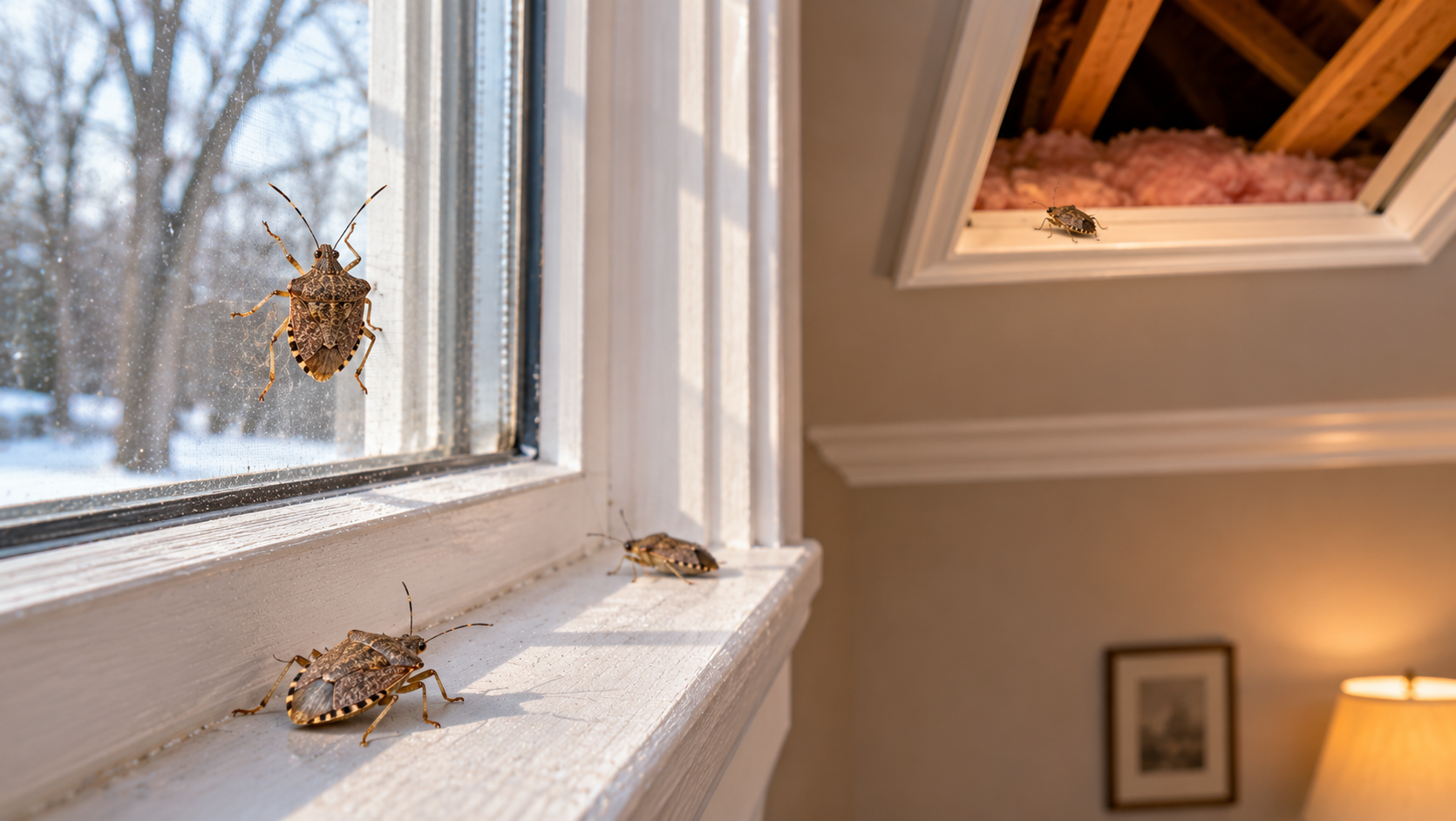
On a chilly morning, a homeowner finds several shield-shaped insects crawling across a sunny bedroom window. A week later, another appears near the attic hatch. It can feel as though the house is producing stink bugs, especially when outdoor insect activity has nearly disappeared. Usually, though, these insects enter earlier and emerge from sheltered areas as conditions change.
Across Middletown and surrounding New York communities, our technicians investigate seasonal stink bug activity by tracing likely access points and identifying where insects have gathered. Understanding their overwintering behavior helps homeowners choose sensible prevention without mistaking every indoor sighting for a growing infestation.
Why Windows Become Stink Bug Gathering Places
Brown marmorated stink bugs commonly seek protected winter shelter as autumn temperatures fall. Sunny walls and window frames offer places to gather before they slip into narrow gaps. Once indoors, changing temperatures can prompt some insects to leave their hiding spots and move toward light. A warm window may be where homeowners notice them, not where they originally entered.
Several features can explain repeated sightings:
- Sunny exterior walls: Warm afternoon surfaces can attract stink bugs during their autumn search for shelter.
- Window trim gaps: Small openings around frames provide potential routes into protected cavities.
- Interior light: Insects emerging from winter hiding places may move toward brighter rooms and windows.
- Weatherstripping defects: Worn seals around doors and windows can create additional access points.
- Nearby vegetation: Gardens and trees provide seasonal habitat, although their presence does not prove entry.
Their shape and odor are useful identifying clues. Stink bugs generally do not sting people or infest stored food, but they release an unpleasant smell when disturbed or crushed. A careful collection method is usually preferable to smashing them against walls or curtains.
Our article on New York stink bugs explains their seasonal habits and why preventing access matters. Finding insects at the glass is a reason to examine surrounding openings, rather than spray every window indiscriminately.
How Attics and Wall Voids Provide Winter Shelter
An attic can feel almost empty while harboring insects in hard-to-see spaces. Stink bugs can settle behind siding, around roof intersections, or inside wall cavities before cold weather becomes severe. They typically remain inactive during colder periods. A temporary warming trend or heat escaping from the building may cause some to move again.
During an inspection, we pay attention to:
- Roofline transitions: Gaps where different building materials meet may provide sheltered access.
- Soffits and vents: Damaged screens or poorly sealed edges can allow entry without an obvious hole.
- Attic penetrations: Openings around certain service lines may connect exterior and interior spaces.
- Upper windows: Repeated insects near frames can suggest activity within nearby protected voids.
- Prior repairs: Aging caulk or disturbed trim may reopen paths that appeared sealed previously.
Indoor winter appearances do not necessarily mean stink bugs are reproducing in the attic. Many overwintering adults simply emerge from places where they have been resting. That distinction changes the response: the priority is identifying entry routes and reducing the insects already inside, not searching for an indoor breeding colony that may not exist.
Our discussion of fall pest movement describes why seasonal inspections cover attic spaces, doors, vents, and exterior conditions together. A single visible insect offers less information than its location and the condition of nearby openings.
Reduce Indoor Sightings Without Creating New Problems
The best time to address many entry routes is before autumn aggregations become established. However, winter sightings are still useful evidence. We can evaluate accessible gaps, discuss the extent of activity, and recommend appropriate interior or exterior measures based on the season and site.
A practical prevention plan may involve:
- Species confirmation: Verify that the insect is a stink bug rather than another seasonal visitor.
- Entry inspection: Review accessible window trim, screens, door seals, and exterior penetrations.
- Appropriate sealing: Correct suitable gaps without obstructing ventilation or required building drainage.
- Targeted control: Consider treatments only where justified, using label directions and site-specific precautions.
- Follow-up observations: Note which rooms produce fresh sightings and whether the pattern changes.
Avoid sealing attic vents completely or blocking necessary airflow in an effort to stop insects. Those changes can create moisture and ventilation problems. Likewise, spraying into electrical fixtures or inaccessible cavities is unsafe and may not reach the insects. Some repairs belong with a qualified building professional.
Our stink bug service includes examining exterior access routes and secluded interior spaces, with targeted measures where needed. We explain what the inspection supports and which preventive corrections may reduce future activity. Even a well-maintained building can occasionally admit an insect, so progress is measured by fewer recurring intrusions rather than an unrealistic promise of zero sightings forever.
Keep Seasonal Visitors Outside the Living Space
If stink bugs continue appearing around windows or attic access points, contact United States Pest Service for a professional assessment. We can identify the insects, investigate likely routes, and recommend control and exclusion steps suited to your New York property.