
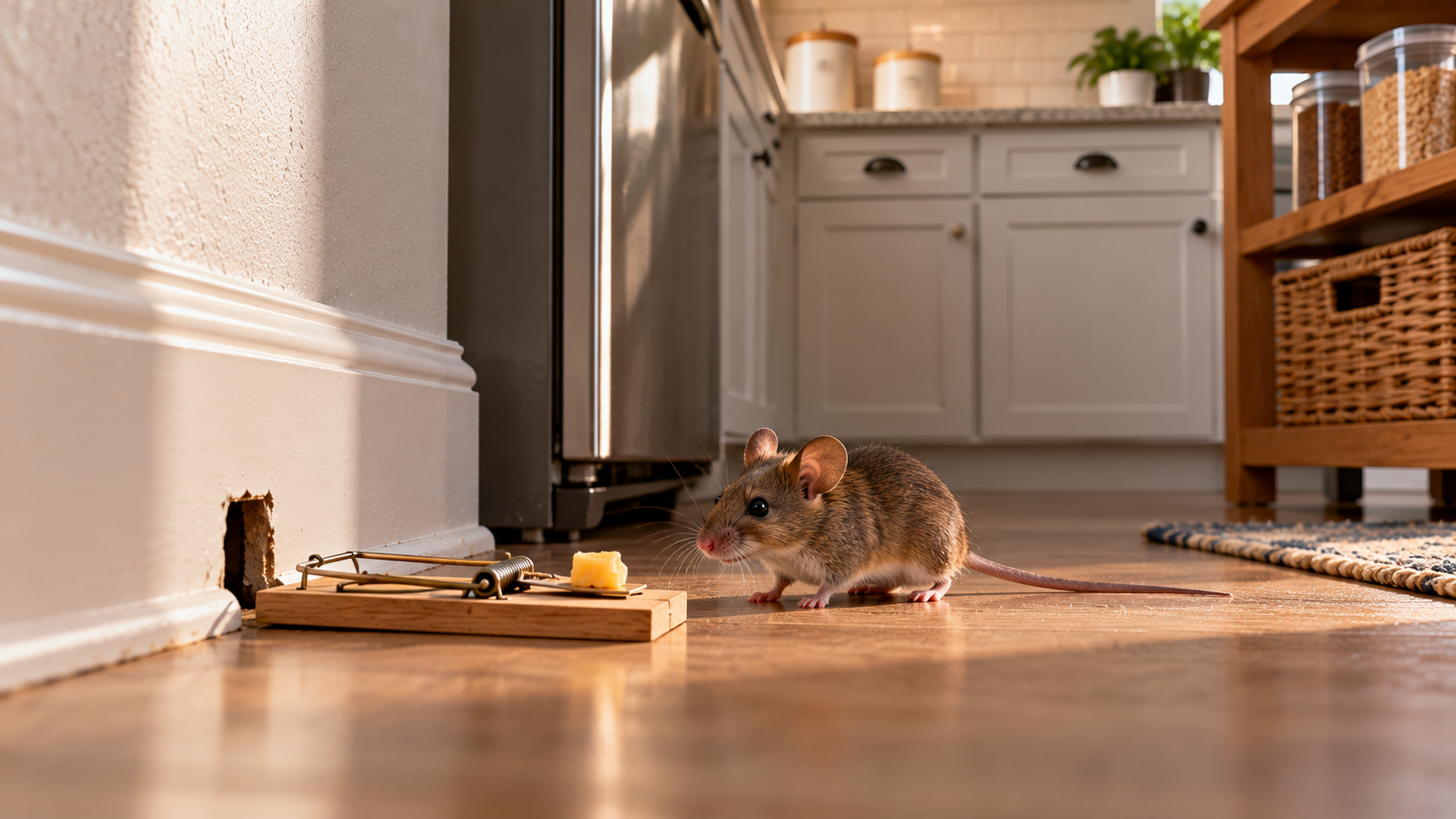
Catching a mouse in the kitchen can feel like progress. The scratching stops for a night, and the trap seems to have solved the problem. But a captured rodent cannot explain how it entered, whether others remain, or why the building offered suitable shelter in the first place. For New York homeowners, those unanswered questions can turn an isolated incident into a recurring concern.
DIY rodent traps may have a limited role in detecting or reducing activity, but they are not a complete diagnosis. Our technicians investigate movement patterns, nesting areas, access points, and food sources together. That broader view helps determine whether mice or rats are using the property regularly and what a durable response requires.

A Successful Trap Does Not Reveal the Full Infestation
Mice and rats frequently move along walls, inside ceilings, or behind stored belongings. A trap placed where someone notices movement may catch one animal without showing where the rest of the activity occurs. Trap results also vary with placement, competing food, rodent behavior, and changes in the surrounding environment.
Several unanswered questions can remain after a capture:
- Population size: One trapped animal cannot establish whether others are nesting nearby or entering separately.
- Nesting locations: Insulation, wall voids, and crowded storage areas may conceal activity far from the trap.
- Travel routes: Droppings and rub marks can reveal paths that are not visible from the original sighting.
- Species differences: Mice and rats have different habits, making accurate identification important for control planning.
- Existing damage: Gnawed wiring, contaminated insulation, and stored-food losses may need separate assessment.
Repeated captures can provide information, but they should not be interpreted without an inspection. Old droppings can linger after activity ends, while fresh evidence in another room may indicate a route that was missed. Our article about rodent entry gaps examines how seemingly minor exterior openings connect to concealed indoor spaces.
Rather than counting only what a trap catches, we look for evidence that distinguishes an active infestation from an occasional visitor.
Entry Points and Attractive Conditions Can Keep the Cycle Going
An opening around a garage door or utility line can remain usable long after a trapped mouse is removed. Rodents also respond to predictable resources: accessible food, water, nesting cover, and protected temperatures. Unless those conditions are evaluated, another animal may find the same route into the home.
During an inspection, we consider factors such as:
- Exterior openings: Foundation gaps, vents, roof edges, and pipe penetrations may allow repeated access.
- Food availability: Pet supplies, pantry storage, and waste handling can influence where rodents forage.
- Moisture sources: Plumbing leaks and damp utility spaces may provide water near concealed shelter.
- Undisturbed belongings: Boxes and insulation can supply cover or nesting material in quiet rooms.
- Outdoor pathways: Vegetation and accumulated materials can conceal movement toward the building.
Not every gap is active, and not every food source indicates an infestation. Physical evidence helps establish which conditions matter at a particular property. Our discussion of rodent attractants explains how food, water, and shelter can work together to sustain repeat visits.
Exclusion also requires care. Closing an opening before determining whether rodents remain inside can leave animals trapped within inaccessible spaces. A coordinated plan considers removal and safe access before recommending sealing or structural repair. A qualified technician can also distinguish work included in pest service from damage requiring a contractor.
Professional Rodent Control Connects Removal With Prevention
The purpose of professional rodent control is not simply to install more traps. It is to identify the species, establish where activity is concentrated, and choose control measures that fit the property. At homes with children or pets, placement and access restrictions matter as much as effectiveness.
A structured service plan may include:
- Detailed inspection: Checking attics, basements, garages, and foundation lines for droppings, gnawing, and nesting evidence.
- Targeted control: Selecting trapping or secured bait systems according to findings and household considerations.
- Exclusion planning: Identifying active access routes and coordinating appropriate sealing after occupancy is assessed.
- Sanitation recommendations: Explaining how contaminated materials and accessible resources affect continued activity.
- Follow-up monitoring: Comparing later findings with the initial inspection to evaluate progress and adjust the response.
A quieter night does not guarantee that a rodent problem has ended. Follow-up can reveal whether fresh droppings are appearing, whether previously used routes remain active, and whether new openings need attention. It can also clarify when further treatment is unnecessary.
Effective control is therefore measured by more than the number of animals captured. It requires reliable evidence that activity has declined and that the conditions enabling repeated entry are being addressed. For homeowners, this offers a clearer explanation of the problem and a more practical basis for protecting the property over time.
Find the Problem Beyond the Trap
If rodents keep appearing despite trapping, contact United States Pest Service for a professional inspection. Our team can identify hidden activity, evaluate access routes, and recommend targeted control and follow-up for your home.