
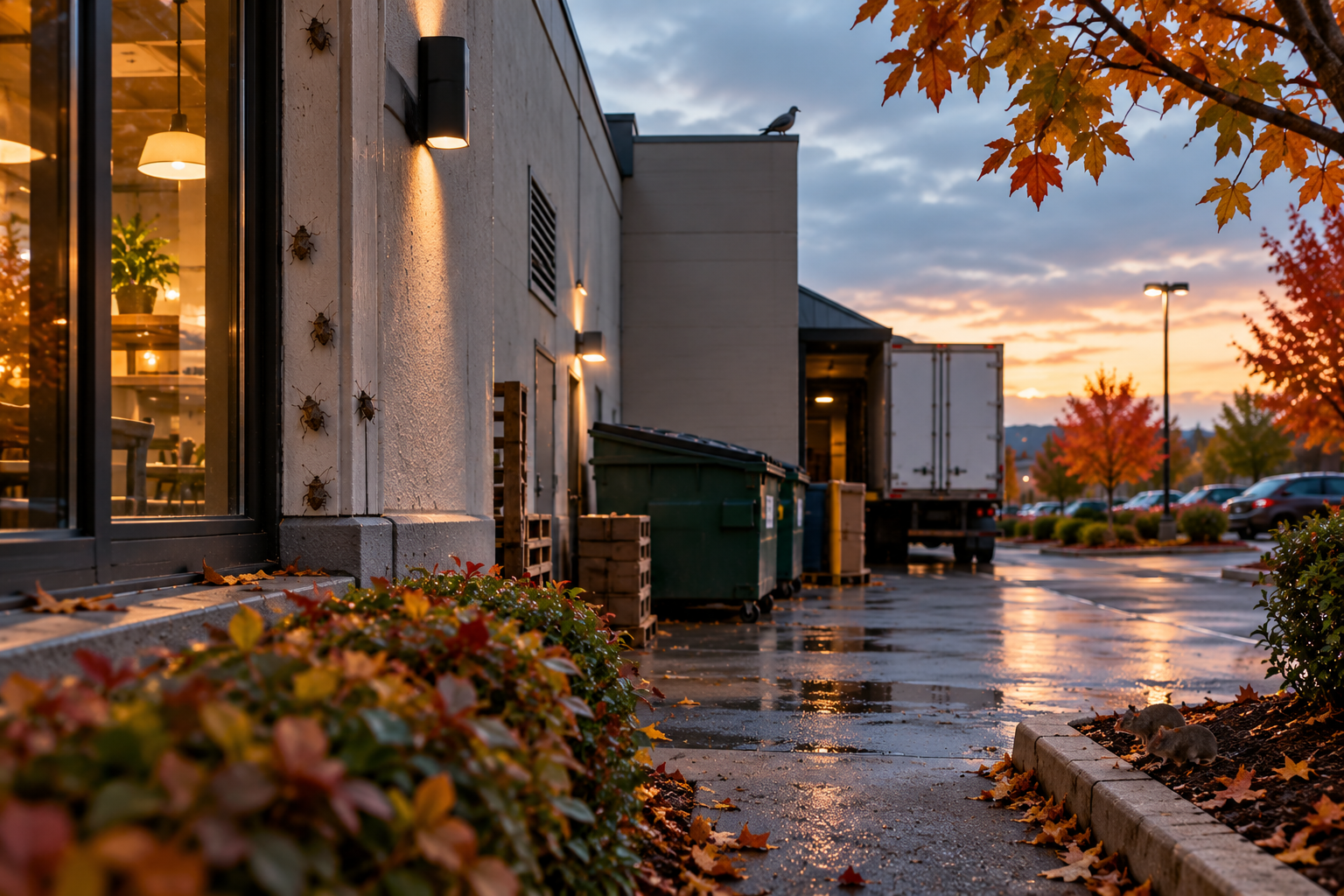
Fall weather can change pest behavior quickly across homes, offices, restaurants, schools, warehouses, hotels, and other properties. Cooler nights, shorter days, changing moisture, and reduced outdoor food sources can make indoor spaces more attractive to rodents, cockroaches, ants, spiders, stink bugs, bed bugs, termites, fleas, flies, mosquitoes, ticks, bees, bats, and stinging insects. Some pests move toward shelter, while others remain active because buildings continue to provide warmth, water, food, or protected hiding places.
Our team approaches pest control by looking at those seasonal changes before they become larger problems. A few droppings near a loading area, repeated ants in a break room, or stink bugs clustering around windows can all signal that the property is becoming more useful to pests. Professional inspection helps us connect visible activity with the entry points, moisture conditions, and shelter that are supporting it.
Cooler Nights Push Pests Toward Protected Indoor Spaces
Rodents are among the most noticeable fall invaders because mice and rats can enter through small structural gaps while searching for warmth and nesting space. Cockroaches and ants may also move deeper into buildings where kitchens, drains, utility rooms, and food-storage areas provide dependable resources. Stink bugs often gather on exterior walls before slipping into protected voids where they can overwinter.
Our article on year-round school planning shows why seasonal pest pressure should be managed with inspection, sanitation, exclusion, targeted treatment, documentation, and follow-up rather than waiting for a visible infestation.
Fall inspections may focus on:
- Door sweeps, foundation gaps, vents, and utility penetrations
- Kitchens, cafeterias, break rooms, and food-storage areas
- Loading docks, waste stations, and delivery entrances
- Attics, basements, wall voids, and low-disturbance storage areas
- Plumbing zones where moisture supports cockroaches or ants
- Exterior walls where stink bugs or stinging insects remain active
Finding these conditions early helps our technicians address the source instead of reacting only to pests that have already moved inside.
Moisture, Food, And Building Use Can Keep Fall Activity Going
Cool weather does not eliminate pest pressure. Homes and businesses can still provide the conditions that many pests need. Leaking fixtures, damp basements, food residue, open trash, cluttered storage, and frequent deliveries can continue supporting activity long after summer ends.
Different properties face different risks. Restaurants may see roaches, flies, rodents, or ants around kitchens and waste areas. Hotels and apartments may need to watch for bed bugs, cockroaches, and rodents. Warehouses can develop rodent activity around inventory and loading zones, while offices may experience ants, spiders, or stink bugs around entrances and utility spaces.
Important conditions to monitor include:
- Moisture around drains, plumbing, basements, or utility rooms
- Food residue and waste that remain accessible overnight
- Cardboard, fabric, or stored materials that provide shelter
- Exterior vegetation touching walls or rooflines
- Standing water that can support mosquito activity
- Repeated pest sightings near the same room or entry point
The pattern matters because recurring activity usually means that something on the property continues to support the pest.
Targeted Prevention Helps Reduce Repeat Fall Problems
Our guide to eco-friendly pest control explains why prevention, precise applications, lower-impact materials, habitat management, and ongoing monitoring can reduce unnecessary treatment while maintaining effective control.
A professional fall pest-control plan may include:
- Inspecting for active pests and environmental conditions
- Sealing confirmed access points after routes are identified
- Applying targeted treatments where evidence supports them
- Correcting moisture, sanitation, or storage issues
- Monitoring previously active areas for renewed pressure
- Adjusting service as weather and pest behavior change
That approach is especially useful because fall conditions can shift from week to week. A warm stretch may keep mosquitoes, ticks, bees, or stinging insects active outdoors, while colder nights increase rodent, cockroach, or stink bug pressure around sheltered spaces.
Termites and bed bugs also require different thinking because their activity is not always obvious from seasonal weather alone. Termites can remain concealed within wood or soil-connected areas, while bed bugs follow people, furniture, luggage, and shared spaces. Professional identification prevents unrelated problems from being grouped simply because they become noticeable during the same season.
Commercial properties benefit from documentation because pest trends may connect to operating schedules. A rodent sighting near a loading dock, repeated flies around a drain, or ants returning to one break room may reveal a recurring sanitation, access, or moisture issue. Service records help our technicians compare activity over time and make the next visit more focused.
Residential properties benefit from the same principle. A one-time sighting may not mean a major infestation, but repeated droppings, trails, webs, bites, or noises should be evaluated before activity spreads into less accessible areas.
Fall pest control works best when inspection, targeted treatment, exclusion, sanitation, and monitoring operate as one plan. The goal is not to apply more product. It is to understand how weather, building use, and property conditions are changing, then respond where the evidence shows the greatest risk.
Keep Seasonal Pest Pressure From Moving In
If cooler weather is bringing pests closer to your home or business, contact United States Pest Service for professional pest control focused on inspection, targeted treatment, exclusion, monitoring, and long-term prevention.