
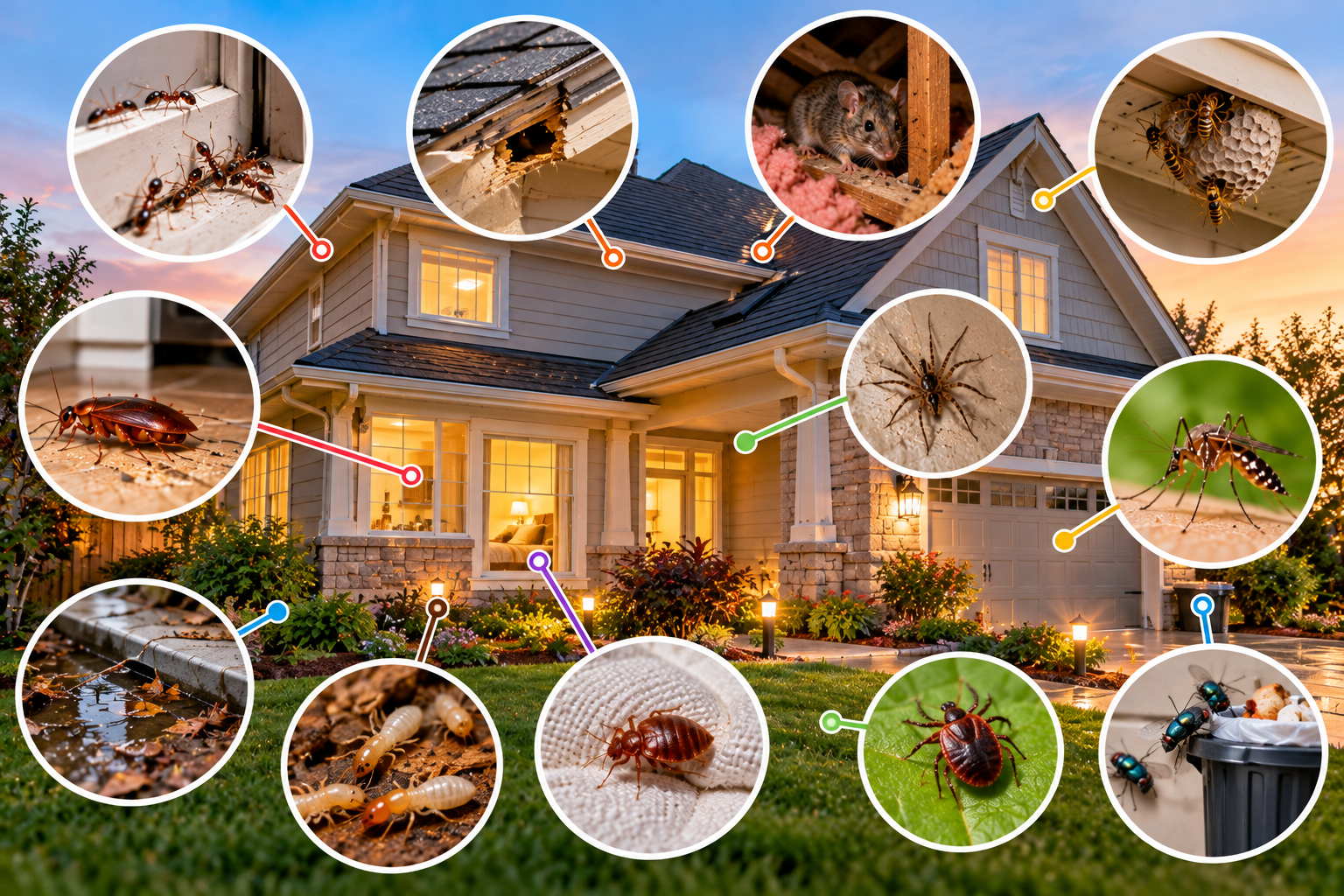
A one-time pest treatment can be useful when activity is limited, and the source is straightforward, but many infestations involve more than the pest that happens to be visible. Ant trails, cockroach sightings, rodent droppings, spider webs, mosquito activity, stink bugs, fleas, ticks, termites, bed bugs, flies, and stinging insects can all point to conditions elsewhere on the property.
Our team approaches pest control by looking at why the problem developed in the first place. Entry gaps, moisture, food, clutter, standing water, outdoor debris, and seasonal changes can keep supporting activity even after visible pests are reduced. Professional inspection helps us connect those factors so treatment is aimed at the source instead of only the latest symptom.
A Single Treatment Can Miss The Conditions Supporting The Infestation
Fall can expose weaknesses that were already present around a home. Cooler nights may bring rodents toward garages, basements, attics, and wall voids, while cockroaches, spiders, stink bugs, ants, and other pests may continue using sheltered areas. Our guide to fall pest pressure explains how changing weather can shift activity without eliminating the underlying conditions.
A detailed inspection may reveal:
- Gaps around doors, windows, vents, and utility openings
- Moisture near plumbing, foundations, basements, or crawl spaces
- Food residue or accessible pet supplies in kitchens and storage areas
- Standing water that supports mosquito activity
- Vegetation or debris that shelters pests near the structure
- Older pest evidence that needs to be compared with fresh signs
If these conditions remain in place, a one-time treatment may lower activity temporarily while leaving the property vulnerable to another wave.
Different Pests Require Different Source-Focused Responses
One reason recurring problems are difficult to solve with a single visit is that pests behave differently. Ants may follow trails between food and nesting sites, cockroaches often stay close to warmth and moisture, rodents move along protected edges, and spiders may remain where prey insects are available. Termites can stay concealed in structural areas, while bed bugs can spread through belongings and travel.
Our technicians use the evidence on the property to decide where treatment, monitoring, exclusion, or another response belongs.
A source-focused plan may include:
- Treating confirmed pest hot spots instead of applying products everywhere
- Using monitoring tools to measure activity after service
- Recommending exclusion where structural gaps allow repeated entry
- Addressing moisture or sanitation conditions that support pest survival
- Matching treatment to the pest species and property layout
- Scheduling follow-up when hidden activity may still be present
This makes professional service more precise because the response is built around the actual pest and the conditions supporting it.
Follow-Up Helps Confirm Whether The Source Is Actually Resolved
Our article on repeat infestation prevention explains why inspection, targeted treatment, prevention, and follow-up work best together. The property can change after the first service. New gaps can appear, moisture can return, vegetation can grow closer to the structure, and storage areas can become cluttered again.
Follow-up may include:
- Rechecking previously active rooms and exterior zones for fresh evidence
- Comparing new droppings, trails, webs, or sightings with earlier findings
- Monitoring damp areas where cockroaches or other pests may return
- Reviewing rodent entry points after exclusion or repair work
- Checking outdoor conditions that can support mosquitoes, ticks, or stinging insects
- Adjusting treatment if seasonal pressure shifts to another part of the property
That comparison is important because old evidence can remain after activity has stopped. Droppings, webs, damaged materials, and insect debris do not always prove that the infestation is still active. A trained inspection helps distinguish old signs from new ones.
Recurring pest control is therefore not about treating continuously without a reason. It is about using each inspection to confirm what has changed, whether activity is declining, and which conditions still need attention. When the source has been reduced, service can stay focused on monitoring and prevention rather than unnecessary treatment.
Professional oversight also helps when several pest pressures overlap. Moisture may support cockroaches and other insects, which can then attract spiders. Outdoor debris may shelter rodents and insects near the foundation. Gaps around utilities can allow several pests to use the same route indoors. Looking at these connections helps our team solve more than one symptom at a time.
A one-time treatment can still have a place when the infestation is truly isolated, and the contributing conditions are limited. The problem is assuming every infestation fits that pattern. When pests return to the same rooms, entry points, or exterior zones, the repeated activity usually deserves a closer inspection.
The strongest long-term plan combines accurate identification, targeted treatment, exclusion, moisture control, sanitation, and follow-up. That approach gives our technicians a clearer way to address what keeps the infestation going instead of repeatedly reacting to the pest that is easiest to see.
Stop Treating Symptoms And Start Addressing The Source
If pest activity keeps returning around your home or business, contact United States Pest Service for professional pest control focused on inspection, targeted treatment, prevention, and follow-up.