
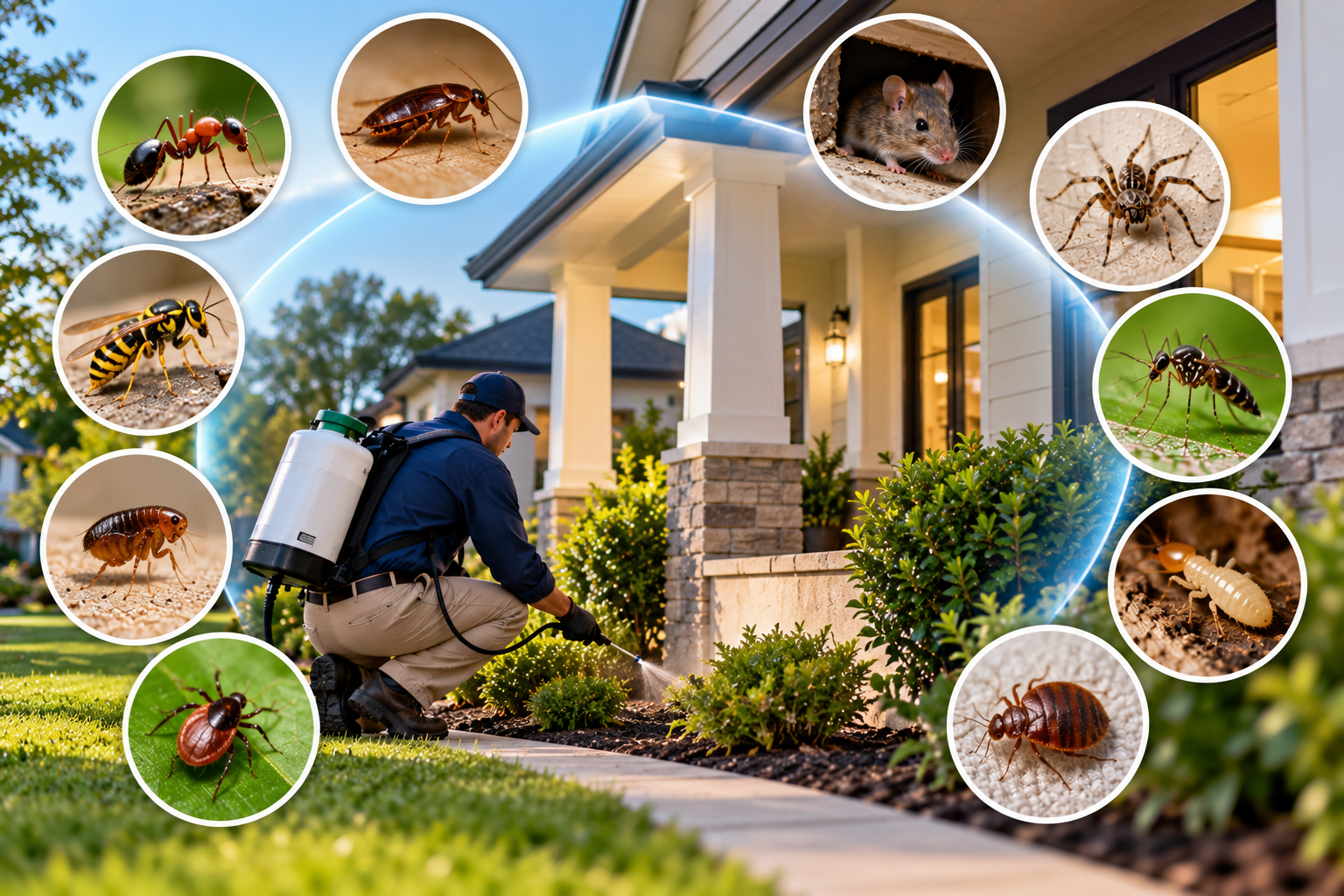
Pest problems often return when treatment focuses only on what is visible. Ant trails, cockroach sightings, rodent droppings, spider webs, or mosquito activity may be signs of a larger issue involving entry points, moisture, food, shelter, or seasonal conditions. General pest control is most effective when it addresses those underlying factors instead of treating each sighting as an isolated event.
Our team uses inspection, targeted treatment, prevention, and follow-up to reduce the conditions that allow pests to come back. This approach can apply to ants, bed bugs, cockroaches, fleas, flies, mosquitoes, rodents, spiders, stinging insects, stink bugs, termites, ticks, and other pests supported by the current service scope. Long-term results depend on understanding where pests are active, why they are there, and what needs to change around the property.
Inspection Finds the Conditions That Support Repeat Activity
A detailed inspection helps reveal why pests keep returning. Entry gaps, damp areas, food residue, clutter, damaged screens, standing water, and outdoor debris can all create favorable conditions. Without identifying these contributing factors, a one-time treatment may reduce activity temporarily while leaving the source untouched.
Our guide to seasonal garden prep explains why clearing debris, managing moisture, trimming vegetation, and watching for early signs can improve seasonal pest management.
During an inspection, our team may focus on:
- Checking doors, windows, vents, and utility openings for pest entry
- Looking for moisture near plumbing, basements, crawl spaces, or foundations
- Reviewing garages and storage areas for clutter and hidden activity
- Inspecting kitchens and pantries for food sources and pest evidence
- Identifying standing water or dense vegetation around exterior areas
- Comparing fresh pest signs with older evidence to judge current activity
These findings help us choose treatment locations more precisely and avoid unnecessary applications in areas that are not contributing to the problem.
Targeted Treatment Works Better When the Property Is Prepared
General pest control works best when technicians can reach the areas where pests travel, hide, and feed. Cluttered rooms, blocked baseboards, inaccessible cabinets, and crowded storage spaces can make it harder to inspect accurately or apply treatment where it is most useful.
Our team uses targeted methods because different pests behave differently. Ants may follow trails between food and nesting sites, cockroaches often hide around warmth and moisture, rodents travel along protected edges, and spiders may remain where prey insects are available. Treatment should match those patterns rather than relying on broad application alone.
A more effective service may involve:
- Treating confirmed pest hot spots instead of applying products everywhere
- Using monitoring tools to track activity after the initial service
- Recommending exclusion where gaps allow repeated pest entry
- Addressing moisture or sanitation conditions that support pest survival
- Adjusting treatment based on pest species and property layout
- Scheduling follow-up when activity requires continued monitoring
This property-specific approach helps reduce the chance that pests simply shift to another untreated location and return later. Consistency also helps prevent separate pest pressures from overlapping. For example, moisture can support cockroaches while also attracting other insects that become prey for spiders. Outdoor debris can shelter rodents and insects close to the structure. Reviewing these connected conditions allows our team to address several risk factors through one coordinated prevention plan.
Prevention and Follow-Up Help Maintain Long-Term Results
Repeat infestations often happen because conditions change after the initial service. New gaps can appear, moisture can return, vegetation can grow closer to the structure, and storage areas can become cluttered again. Seasonal shifts can also change which pests are most active and where they concentrate.
Our resource on eco-friendly treatment prep explains why clear access, organized spaces, moisture control, proper food storage, and follow-up support more consistent results over time.
A long-term pest-control plan may include:
- Rechecking previously active areas for new pest evidence
- Maintaining access to baseboards, cabinets, garages, and utility areas
- Monitoring moisture-prone zones and correcting recurring damp conditions
- Keeping food and pet supplies stored in sealed containers
- Trimming vegetation and removing outdoor debris near the structure
- Revisiting treatment needs as seasonal pest pressure changes
Follow-up gives our technicians a chance to compare current conditions with earlier findings. If activity is declining, the plan may remain focused on prevention and monitoring. If new signs appear, treatment can be adjusted before the problem becomes more established.
This is why general pest control can be more effective than repeated one-time reactions. The goal is not simply to remove visible pests. It is to understand the property well enough to reduce the factors that allow infestations to rebuild.
Professional service also helps separate old evidence from active problems. Droppings, webs, damaged materials, or pest debris can remain after activity has stopped, so interpretation matters. A trained inspection can determine whether the signs point to a current infestation, a developing issue, or an older problem that still requires monitoring.
Keep Pest Problems From Starting Over
If pest activity keeps returning around your property, contact United States Pest Service for professional inspection, targeted pest control, prevention, and follow-up designed around the conditions that support recurring infestations.