
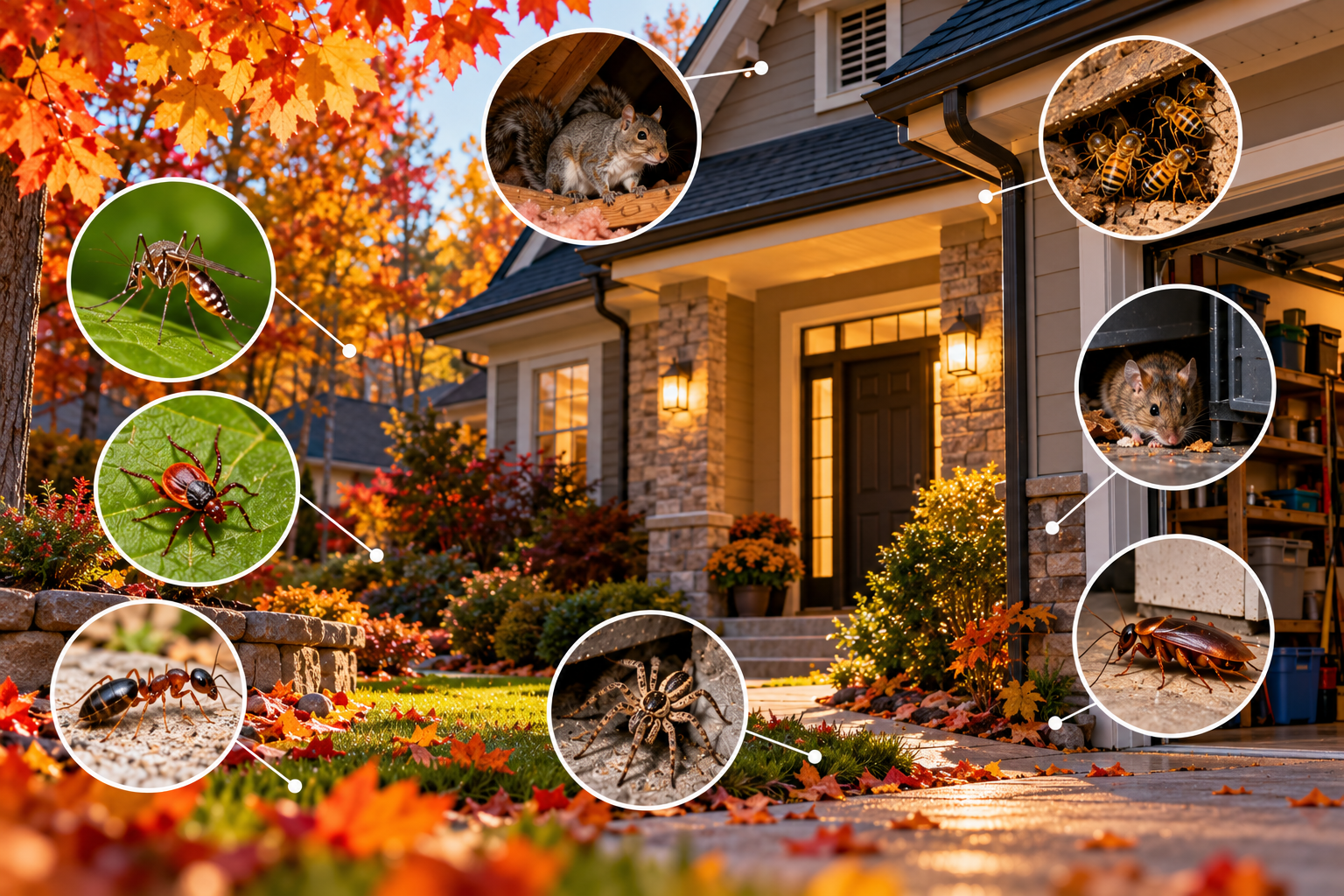
Fall can change pest pressure around New York homes even before temperatures drop sharply. Cooler nights, shorter days, changing rainfall, and shifting outdoor food sources can push some pests toward garages, basements, attics, wall voids, and other protected areas. At the same time, ticks, mosquitoes, ants, cockroaches, spiders, fleas, and stinging insects may remain active outside when weather stays moderate.
Our team approaches pest control by looking at seasonal conditions together rather than treating each sighting in isolation. Entry points, moisture, landscaping, food, shelter, and recent pest evidence can all influence what happens as summer ends. A fall-focused inspection helps identify where pressure is changing and which areas may benefit from professional treatment, monitoring, or prevention before activity becomes harder to manage indoors.
Check Outdoor Areas Before Seasonal Pressure Moves Closer
Late summer and early fall can keep ticks active around grassy and shaded areas, especially near shrubs, wooded edges, fences, leaf litter, and places where pets spend time. Our guide to late-season tick activity explains why moderate temperatures, moisture, wildlife movement, and protected vegetation can keep exposure risks present after the hottest weather fades.
Other outdoor pests may also remain active around the property. Mosquitoes can continue where standing water is available, while ants, spiders, fleas, and stinging insects may use landscaping, structures, or sheltered edges.
Fall exterior checks should include:
- Grassy borders, shrubs, and shaded yard edges where ticks may remain active
- Standing water around gutters, containers, drainage areas, or landscaping
- Vegetation touching siding, windows, or other parts of the structure
- Outdoor food, trash, or pet-feeding areas that attract pests
- Wood piles, debris, or stored materials near the foundation
- Doors, screens, vents, and utility openings that may provide access
These observations give our technicians a clearer picture of where seasonal pressure is concentrated.
Watch For Rodents And Indoor Pests Seeking Stable Shelter
As nights become cooler, rodents can become more noticeable around homes because attics, basements, garages, and wall voids provide steadier shelter. Mice and rats may use small gaps around foundations, doors, utility lines, roof edges, or vents. Cockroaches, spiders, stink bugs, and other indoor pests may also appear more frequently as exterior conditions change.
Our team looks for evidence that shows whether activity is current and where it is coming from.
Useful warning signs include:
- Droppings, gnaw marks, or nesting material in garages or storage areas
- Scratching or movement sounds inside walls, ceilings, or attics
- Cockroach sightings near kitchens, basements, plumbing, or utility spaces
- Spider webs returning repeatedly in low-disturbance areas
- Stink bugs gathering near windows, doors, or sunny exterior walls
- Ant trails continuing around food, moisture, or structural gaps
Repeated signs usually deserve professional inspection because the room where a pest appears may not be where it entered or established shelter.
Prepare The Property So Professional Treatment Can Stay Precise
Professional pest control works best when technicians can clearly access the areas where activity is occurring. Our guide to eco-friendly treatment prep explains that targeted applications depend on clear access, organized spaces, reduced clutter, and attention to outdoor conditions.
Preparation is not about trying to solve the infestation before service. It helps our team inspect more accurately and apply treatment where it is most useful.
Helpful preparation may include:
- Clearing access to baseboards, sinks, cabinets, basements, garages, or crawl spaces
- Securing pet bowls, toys, bedding, and food near treatment areas
- Organizing storage spaces so hidden activity is easier to inspect
- Trimming vegetation that blocks exterior walls or foundation edges
- Removing standing water and reducing debris around outdoor areas
- Following any pest-specific instructions provided before the appointment
After treatment, some activity may still appear while products or control methods take effect. Follow-up helps determine whether the pest population is declining, whether conditions have changed, or whether another area needs attention.
Seasonal timing also gives homeowners a useful baseline for comparison. If new droppings, webs, bites, trails, or indoor sightings appear after temperatures change, those details can help our team distinguish a new problem from older evidence. Keeping track of where and when activity occurs makes follow-up more informative and helps avoid treating unaffected spaces unnecessarily.
Fall is also a useful time to review termite concerns. Moisture, wood-to-soil contact, and structural access can remain important even when surface activity is less visible. Bed bugs are less dependent on outdoor weather and may still be introduced through travel, guests, or belongings, while bats or bees may require specialized handling when they use structural spaces.
The strongest seasonal plan does not assume every pest will behave the same way. Our technicians use inspection findings to determine whether exclusion, targeted treatment, monitoring, habitat changes, or another professional response fits the problem. That keeps service focused on the pests actually present and the conditions helping them persist.
Get Ahead Of Fall Pest Pressure Before It Moves Indoors
If seasonal pest activity is changing around your property, contact United States Pest Service for professional pest control focused on inspection, targeted treatment, eco-conscious methods, prevention, and follow-up.